Source movable small truck tire changer for shops, garages, and fleets
Compare 30 listings for the movable small truck tire changer featuring electric and pneumatic power sources. These units support rim sizes from 14 to 26 inches with bead breaker forces up to 2500 kg for truck tire shops and garages.
Key considerations
Products List




Comprehensive Sourcing Guide
Strategic Sourcing Guide for Movable Small Truck Tire Changers
Understanding the Technical Profile and Operational Scope
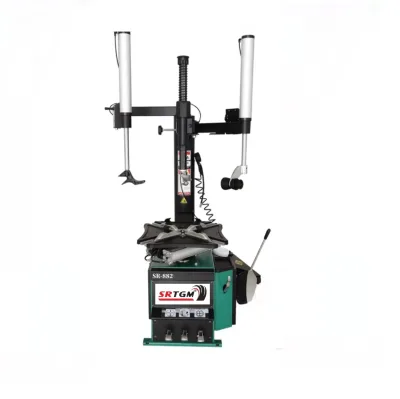
When sourcing a movable small truck tire changer, buyers must first align their operational needs with the specific technical architecture of the equipment. The market offers machines designed with distinct structural configurations to accommodate varying workshop constraints. Observations from current product listings indicate that these units are available in both vertical and horizontal structures. A vertical structure often implies a footprint optimized for floor space, while a horizontal configuration may offer different ergonomic advantages for specific tire mounting procedures. The automation level is another critical variable; listings show a spectrum ranging from fully automatic to semi-automatic operations. Buyers should verify whether the "Automatic" or "Semi-Automatic" designation matches their labor availability and throughput requirements.
The power source is a fundamental specification that dictates the electrical infrastructure needed at the installation site. Available data points to both electric and pneumatic power sources. An electric unit typically requires a stable power supply, with observed standards including 110V/220V and 380V configurations. Conversely, a pneumatic model relies on compressed air, necessitating an on-site compressor system. The working pressure for these pneumatic systems is observed in the range of 8-10 bar, a figure that must be matched by the facility's air supply capacity.
Capacity specifications are paramount for truck tire changers, as they differ significantly from passenger car equipment. The observed specifications for rim sizes span from 14 inches to 26 inches, covering a broad range of light to medium-duty truck applications. The maximum tire diameter is listed at 1600 mm, and the maximum wheel width is 780 mm. These dimensions define the physical limits of the machine. Additionally, the bead breaker force is a critical performance metric, with observed values reaching 2500 Kg. This force is essential for breaking the bead of heavy truck tires without damaging the rim. Buyers must ensure that the machine's stated capacity exceeds the largest tire and rim combination they intend to service regularly.
Compliance, Certification, and Regulatory Standards
Navigating the compliance landscape is essential for international procurement to ensure the equipment meets safety and quality expectations. The product listings provide a clear picture of the certifications commonly associated with these machines. Buyers should look for evidence of GS, CE, and RoHS certifications. The CE mark is frequently observed, indicating conformity with health, safety, and environmental protection standards for products sold within the European Economic Area. RoHS compliance ensures that the device does not contain restricted hazardous substances, which is often a requirement for import into various jurisdictions.
Beyond general certifications, specific standards are often cited in product documentation. The ISO standard is a recurring reference, with some listings explicitly mentioning ISO2008 or general ISO compliance. These standards typically relate to quality management systems and manufacturing processes. It is also noted that some products adhere to specific pressure standards, such as 700 bar, though this may refer to specific components rather than the entire machine's operating pressure. The standard operating voltage is often listed as 110V/220V or 380V, which serves as a technical standard for electrical compatibility.
Buyers must treat these certifications as observations of specific listed products rather than universal guarantees for every unit in the category. When evaluating a potential supplier, the procurement team should request valid certification documents that correspond to the specific model number being purchased. For instance, a model designated as "BLS-TC2600T" or "T568" should have its own specific certification file. The presence of a "Certificate: ISO2008" in a listing suggests a specific quality assurance protocol, but this must be verified against the actual batch of goods. Relying solely on the presence of a "CE" label without supporting documentation can lead to compliance risks during customs clearance or on-site safety inspections.
Cost Drivers and Pricing Dynamics
The pricing structure for movable small truck tire changers exhibits significant variance, with observed listed prices ranging from 1 USD to 5699 USD. This wide range is not indicative of a single product tier but rather reflects differences in automation, power source, build quality, and included features. A unit priced at the lower end of the spectrum may be a basic manual or semi-automatic model with minimal features, while a unit at the higher end likely includes advanced automation, robust construction, and comprehensive safety systems.
Several factors drive these cost variations. The power source is a primary determinant; pneumatic systems may have different cost structures compared to fully electric units with integrated control panels. The degree of customization is another significant cost driver. Listings indicate that customization is available, including options for customized colors and specific structural modifications. Products that offer OEM/ODM services or "Customized: Ok" status often command a premium due to the engineering and tooling required for bespoke production.
The Minimum Order Quantity (MOQ) also influences the effective unit cost. The observed MOQ range is 1 to 10 units. For buyers seeking a single unit for a small garage, an MOQ of 1 is favorable. However, for fleet operators or tire shop chains, purchasing within the 1-10 range might unlock volume pricing or reduce per-unit logistics costs. The packaging method, often listed as "Wooden Case," "Wooden Box," or "With Wooden Box," adds to the overall cost but is necessary for protecting the machinery during international shipping. Buyers should factor in the cost of this heavy-duty packaging, as it ensures the machine arrives in "New" condition, ready for immediate deployment.
Typical Applications and Operational Environments
The application scope for these machines is diverse, extending beyond simple tire changing to broader maintenance operations. The primary application is identified as "Trucks," specifically targeting "Truck Tire Shop," "Garage," and "Tire Shops." This indicates that the equipment is designed for commercial environments where high-volume, heavy-duty tire servicing is the norm. The machine's ability to handle rim sizes from 14" to 26" and tire diameters up to 1600 mm makes it suitable for a wide array of light and medium-duty trucks, buses, and agricultural vehicles.
The "movable" aspect of the equipment is crucial for specific operational environments. In a workshop with limited space or where different tire sizes are serviced in different bays, a unit with a mobile design allows for flexible repositioning. The horizontal or vertical structure may influence how the machine fits into a specific workflow. For instance, a vertical design might be preferred in a narrow bay, while a horizontal design could be better for a wide, open floor plan.
The working environment also dictates the choice of power source. A facility with reliable electricity but limited compressed air capacity would benefit from an electric model. Conversely, a remote site or a workshop with an existing robust pneumatic system might find a pneumatic model more efficient. The "Standard" classification of the product suggests it is built for general industrial use, but the specific application details, such as the bead breaker force of 2500 Kg, confirm its suitability for the demanding tasks associated with truck tire maintenance.
Supplier Evaluation and Origin Verification
When evaluating suppliers, the geographic origin of the product is a key data point. The majority of the observed listings indicate origins in China, with specific locations including Qingdao, Shandong, and Baoding. Qingdao, in particular, is a known hub for heavy machinery and automotive equipment manufacturing. Understanding the specific origin, such as "Shandong, Qingdao, China," can provide insights into the local supply chain capabilities and the typical manufacturing standards of that region.
Buyers should verify the supplier's ability to provide the specific attributes listed in the product data. For example, if a listing claims "Customization: Available" and "OEM/ODM: Yes," the supplier must demonstrate the capacity to execute these requests. The presence of specific model numbers like "MX-E," "BLS-TC80M," or "HLT" suggests a catalog of established products. Buyers should request detailed specifications for these exact models rather than relying on generic descriptions.
The condition of the product is consistently listed as "New," which is a baseline expectation for new equipment. However, buyers must verify the "New" status through inspection protocols or third-party verification. The "Standard" attribute implies that the machine meets general industry norms, but this should be cross-referenced with the specific certifications and standards mentioned earlier. A supplier that can provide a clear lineage of the product from the factory in Baoding or Qingdao to the final destination is preferable.
Quality Control and Long-Term Procurement Considerations
Ensuring long-term reliability requires a rigorous quality control (QC) approach. The product listings mention "Wooden Case" or "Wooden Box" packing, which is a positive indicator for shipping protection. However, the internal quality of the machine must be verified. Buyers should focus on the structural integrity of the "Vertical" or "Horizontal" design and the durability of the "Automatic" or "Semi-Automatic" mechanisms. The "Color: Red" or "Customized Color Acceptable" options should be evaluated not just for aesthetics but for the quality of the paint and finish, which can affect corrosion resistance in a workshop environment.
Long-term procurement considerations include the availability of spare parts and technical support. While the listings do not explicitly detail after-sales service, the presence of "OEM/ODM: Yes" suggests that the supplier is capable of producing custom parts or modifications. Buyers should inquire about the warranty terms and the lead time for spare parts, especially for critical components like the bead breaker or the pneumatic/electric control systems.
The "Standard" classification of the product implies a baseline of quality, but buyers should not assume this covers all potential failure modes. Establishing a clear acceptance criteria based on the observed specifications, such as the 2500 Kg bead breaker force and the 8-10 bar working pressure, is essential. Regular maintenance schedules should be developed based on the machine's automation level and power source. For instance, a pneumatic system will require regular checks for air leaks and compressor maintenance, while an electric system will need electrical safety inspections.
Comparative Analysis of Key Specifications
To assist in the decision-making process, the following table summarizes the key observed specifications and attributes for the movable small truck tire changers. This comparison highlights the variability in the market and the specific data points buyers should verify.
| Attribute Category | Observed Options | Verification Requirement |
|---|---|---|
| Structure | Vertical, Horizontal | Confirm fit within workshop layout. |
| Automation | Automatic, Semi-Automatic | Match to labor availability and throughput needs. |
| Power Source | Electric, Pneumatic | Verify facility power (110V/220V/380V) or air supply (8-10 bar). |
| Rim Size Capacity | 14" - 26" | Ensure coverage of all intended truck tire sizes. |
| Max Tire Diameter | 1600 mm | Confirm capability for largest tires in fleet. |
| Max Wheel Width | 780 mm | Check against wide-section truck tires. |
| Bead Breaker Force | 2500 Kg | Verify sufficient force for heavy-duty applications. |
| Certifications | GS, CE, RoHS, ISO | Request valid certificates for specific model numbers. |
| Origin | China (Qingdao, Shandong, Baoding) | Assess logistics and supplier reputation in these regions. |
| Packaging | Wooden Case, Wooden Box | Ensure robust protection for international shipping. |
| Customization | Available, Customized Color | Confirm lead time and cost for bespoke requirements. |
This table serves as a checklist for buyers to ensure that the specific unit they are procuring meets all necessary technical and operational requirements. By systematically verifying each attribute against the actual product documentation, buyers can mitigate the risks associated with sourcing specialized industrial equipment. The focus on exact specifications, such as the 2500 Kg force and 1600 mm diameter, ensures that the selected machine will perform reliably in a commercial truck tire shop environment.
FAQs
What certifications are available for movable small truck tire changers?
Available certifications include GS, CE, RoHS, and ISO. Buyers should verify specific documents for each model, as some listings also reference ISO2008 or general ISO compliance for quality management systems.
Which power sources are used for these machines?
Units operate using either electric or pneumatic power sources. Electric models typically require 110V, 220V, or 380V supplies, while pneumatic systems function with a working pressure of 8 to 10 bar.
Can the equipment handle large truck tire dimensions?
Yes, the machines support rim sizes from 14 to 26 inches. They accommodate maximum tire diameters of 1600 mm and wheel widths up to 780 mm with a bead breaker force of 2500 Kg.
How is the product packed for international shipping?
Products are shipped in wooden cases, wooden boxes, or with wooden box packaging. This heavy-duty packing ensures the equipment arrives in new condition and protects it during transit.
What is the minimum order quantity for these changers?
The minimum order quantity ranges from 1 to 10 units. This allows single buyers to purchase one unit while enabling volume discounts for fleet operators or tire shop chains.
Are customization and OEM services available for buyers?
Customization is available with options for customized colors and structural modifications. Many suppliers also offer OEM and ODM services to meet specific buyer requirements.
Where are these machines typically manufactured?
Most units originate from China, specifically from locations like Qingdao, Shandong, and Baoding. These regions are known hubs for heavy machinery and automotive equipment manufacturing.